
Understanding 12V/24V SMPS Power Supply for Reliable DC Power
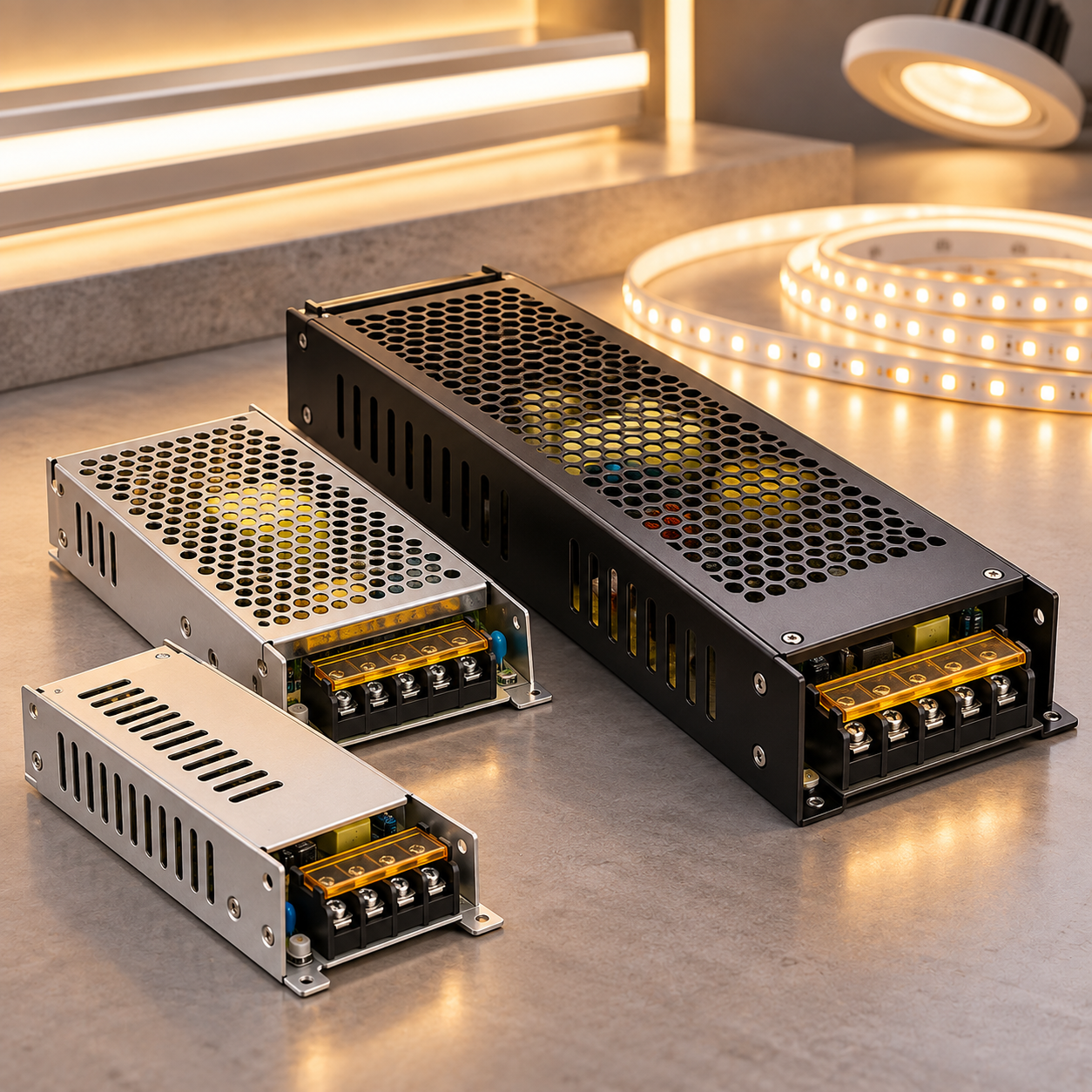
A 12V/24V SMPS power supply converts higher AC input voltage into regulated low-voltage DC output, typically 12V or 24V DC. It is commonly used for LED strips, architectural lighting, signage, display systems, control equipment, and other low-voltage applications where stable power is required.
Proper selection involves more than comparing wattage. Output voltage, current capacity, power rating, wiring length, voltage drop, ventilation, operating conditions, protection features, and installation method should be checked against the connected load. Correct matching can help minimise flickering, overheating, unstable output, and uneven lighting performance.
12V/24V SMPS Power Supply for Controlled and Efficient Power Delivery
Saffron evaluates low-voltage LED power requirements as part of the complete lighting system. Voltage matching, load calculation, current capacity, voltage drop, thermal conditions, installation environment, and control compatibility are considered to support stable and reliable operation.
Power supply selection should be based on the actual LED load and operating conditions rather than simply choosing the highest wattage. Correct sizing, suitable wiring, proper installation, and system-level testing can help minimise voltage-related issues, overheating, flickering, and inconsistent LED performance during commissioning and regular operation.
How Switched-Mode Power Supplies Convert and Regulate Voltage
An SMPS uses high-frequency switching circuitry to convert incoming AC power into controlled DC output. The switching stage, transformer or energy-transfer components, rectification, filtering, and feedback control work together to regulate the output according to the connected load and rated operating conditions.
A 12V/24V SMPS power supply is designed to provide a specified constant-voltage output, such as 12V DC or 24V DC, for compatible LED systems. Proper matching of output voltage, load power, current demand, wiring, and operating conditions helps maintain stable performance and reduces issues such as voltage drop, flickering, and excessive heating.
Why 12V/24V SMPS Power Supply Selection Matters for LED Systems
Voltage drop occurs when resistance in cables, connectors, terminals, PCB tracks, or other electrical paths reduces the voltage reaching the LED load. Excessive voltage drop can cause lower brightness, uneven illumination, color variation, or unstable operation, particularly across longer LED runs.
Cable length and current demand have a direct impact on voltage drop. For the same power level, a 12V system draws approximately twice the current of a 24V system, which can make 24V suitable for certain longer low-voltage installations. However, voltage drop still occurs, so cable size, run length, load distribution, connections, and installation conditions should be evaluated during system design.
How Modern Power Supplies Support Efficient LED Operation
A 12V/24V SMPS power supply provides regulated DC output for compatible LED and low-voltage electronic systems. Its switching-based design can offer efficient power conversion in a compact format, while suitable protection features can help address conditions such as overload, short circuit, and excessive temperature.
Properly selected power supplies can support stable LED brightness, consistent operation, reduced energy losses, and reliable system performance. Matching the output voltage, current capacity, load requirement, wiring, ventilation, and operating environment to the application helps reduce flickering, overheating, and voltage-related performance issues.
12V/24V SMPS Power Supply for Modern Low-Voltage Applications
A 12V/24V SMPS power supply provides regulated low-voltage DC power for LED lighting and other compatible electronic applications. Its performance depends on correct voltage selection, suitable power capacity, efficient conversion, protection features, and proper thermal management.
Reliable results require the power supply to be matched with the actual load and installation conditions. Checking current demand, cable length, voltage drop, ventilation, driver compatibility, and control requirements can help minimise flickering, overheating, and unstable operation while supporting consistent long-term performance .