
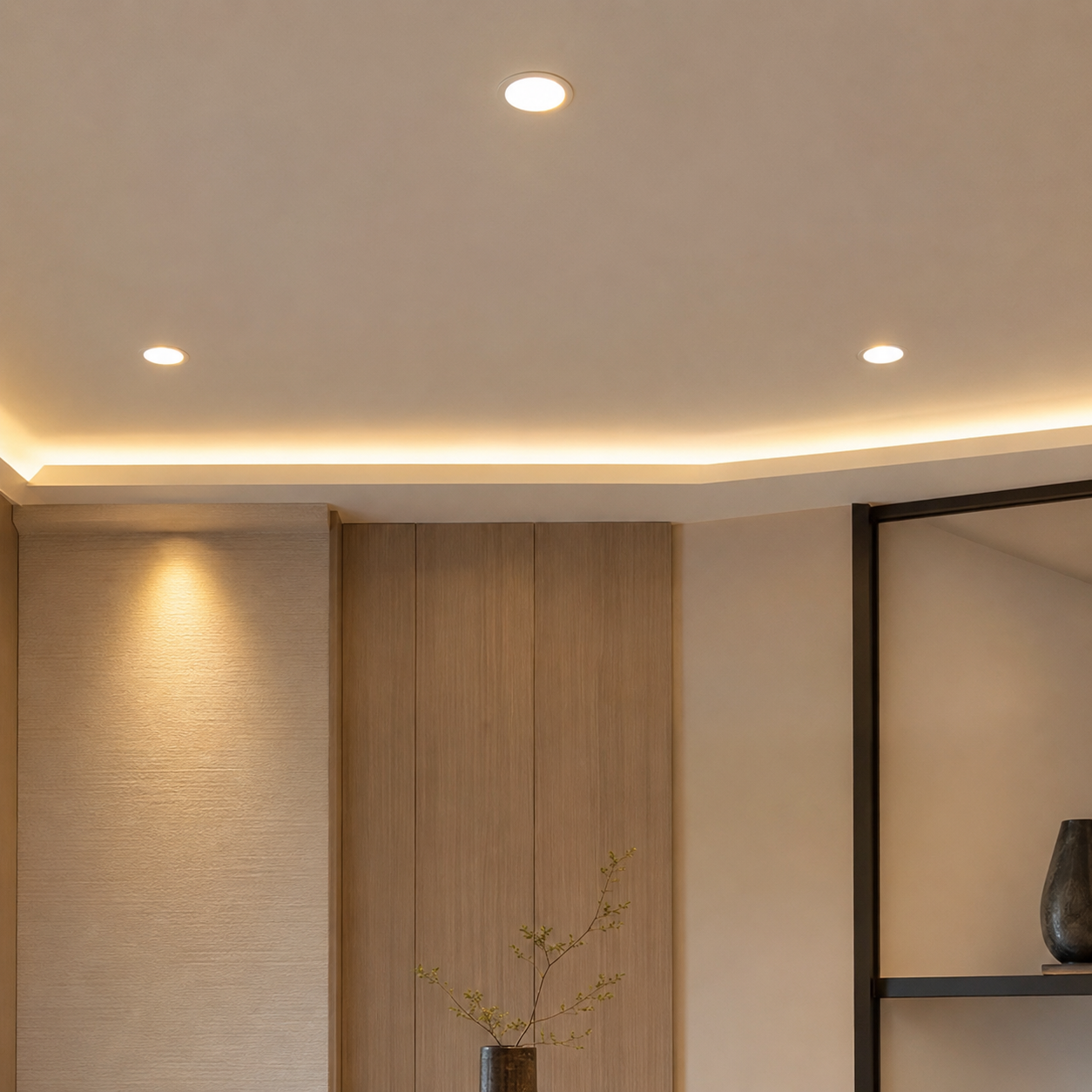
Concealed LED Downlight for Clean and Minimal Interiors
A Concealed LED Downlight is a recessed fixture installed within a ceiling or false-ceiling structure, keeping most of the fitting hidden while providing controlled illumination through the visible aperture. Its clean appearance makes it suitable for architectural, residential, commercial, and other interior lighting applications.
Product selection should consider more than wattage and appearance. Beam angle, lumen output, color temperature, CRI, glare control, cut-out size, installation depth, driver compatibility, thermal conditions, and the intended lighting purpose should be reviewed together to achieve the required performance and visual result.
Concealed LED Downlight for Modern Architectural Lighting
Saffron follows an application-focused approach to LED lighting selection, where a concealed downlight is evaluated beyond appearance or wattage alone. Optical performance, lumen output, beam angle, electrical requirements, installation depth, thermal conditions, driver compatibility, and light quality should be considered according to the intended application.
For lighting manufacturers, interior projects, commercial spaces, and architectural installations, reviewing these technical factors before specification can help achieve more suitable lighting performance. Aligning product characteristics with actual project requirements also supports better installation planning, consistent illumination, and reliable long-term operation.
Understanding the Working Principle of Recessed Lighting
A Concealed LED Downlight is fitted into a ceiling opening, with the LED source and most of the housing positioned above the finished surface. Its optical system directs light downward or toward a defined area, depending on the beam angle and fixture design.
The recessed construction keeps the lighting visually discreet while allowing illumination to support different interior requirements. Depending on the optical design and placement, it can be used for general lighting, accent lighting, work areas, walls, furniture, displays, and other architectural features.
Concealed LED Downlight for Different Lighting Applications
Residential LightingRecessed fixtures can be used in living rooms, bedrooms, kitchens, dining areas, corridors, and study spaces. Placement should account for furniture, activities, ceiling height, and the required illumination rather than relying only on uniform spacing.
Retail and ShowroomsControlled lighting can highlight merchandise, shelves, counters, and display areas. Beam angle, color rendering, glare control, and light intensity should be matched to the products and visual requirements.
Offices and Commercial SpacesOffice lighting should balance useful illumination with visual comfort. Fixture spacing, beam distribution, glare performance, color characteristics, and working-area lighting should be considered during planning.
Hotels and Hospitality InteriorsHotels, restaurants, cafés, and reception areas can use recessed fixtures for ambient and accent lighting. Combining different lighting layers can help define zones while maintaining a clean ceiling appearance.
Architectural and Display LightingFocused fixtures can highlight artwork, wall finishes, furniture, displays, and architectural details. In these applications, beam control and fixture positioning often have a greater impact than simply increasing light output.
Step-by-Step Guide to Selecting the Right Lighting Fixture
1. Define the Lighting PurposeIdentify whether the fixture is intended for ambient, task, accent, display, or architectural lighting. This determines the required light output and optical performance.
2. Check the Ceiling ConditionsMeasure ceiling depth, cut-out size, fixture dimensions, and available space above the ceiling. Confirm these details before installation work begins.
3. Choose the Optical ConfigurationSelect the beam angle and light distribution based on mounting height and coverage requirements. Narrow, medium, and wide beams create different lighting effects.
4. Review Light QualityCheck lumen output, color temperature, CRI, and glare-control features. These specifications should match the visual needs of the space.
5. Confirm Electrical CompatibilityFor a Concealed LED Downlight, verify input voltage, driver specifications, electrical load, and dimming compatibility where required. Proper matching helps support reliable operation.
6. Consider Thermal and Environmental ConditionsReview operating temperature, ventilation, surrounding materials, and moisture exposure where applicable. Installation should follow the product's specified conditions.
7. Test the Proposed LightingFor larger projects, a sample installation or photometric assessment can help evaluate beam spread, glare, shadows, brightness, and overall visual performance before full installation.
Concealed LED Downlight for Clean and Controlled Illumination
A Concealed LED Downlight can provide a clean ceiling appearance while delivering controlled illumination for residential, commercial, retail, hospitality, and architectural spaces. Its performance depends on factors such as beam angle, lumen output, color temperature, CRI, glare control, driver compatibility, and suitable installation conditions.
Selecting the right fixture requires more than comparing wattage or appearance. Reviewing the project requirements, ceiling dimensions, lighting purpose, electrical specifications, thermal conditions, and optical performance can help achieve a more suitable lighting solution. Proper planning and installation also contribute to consistent illumination and dependable long-term performance.