

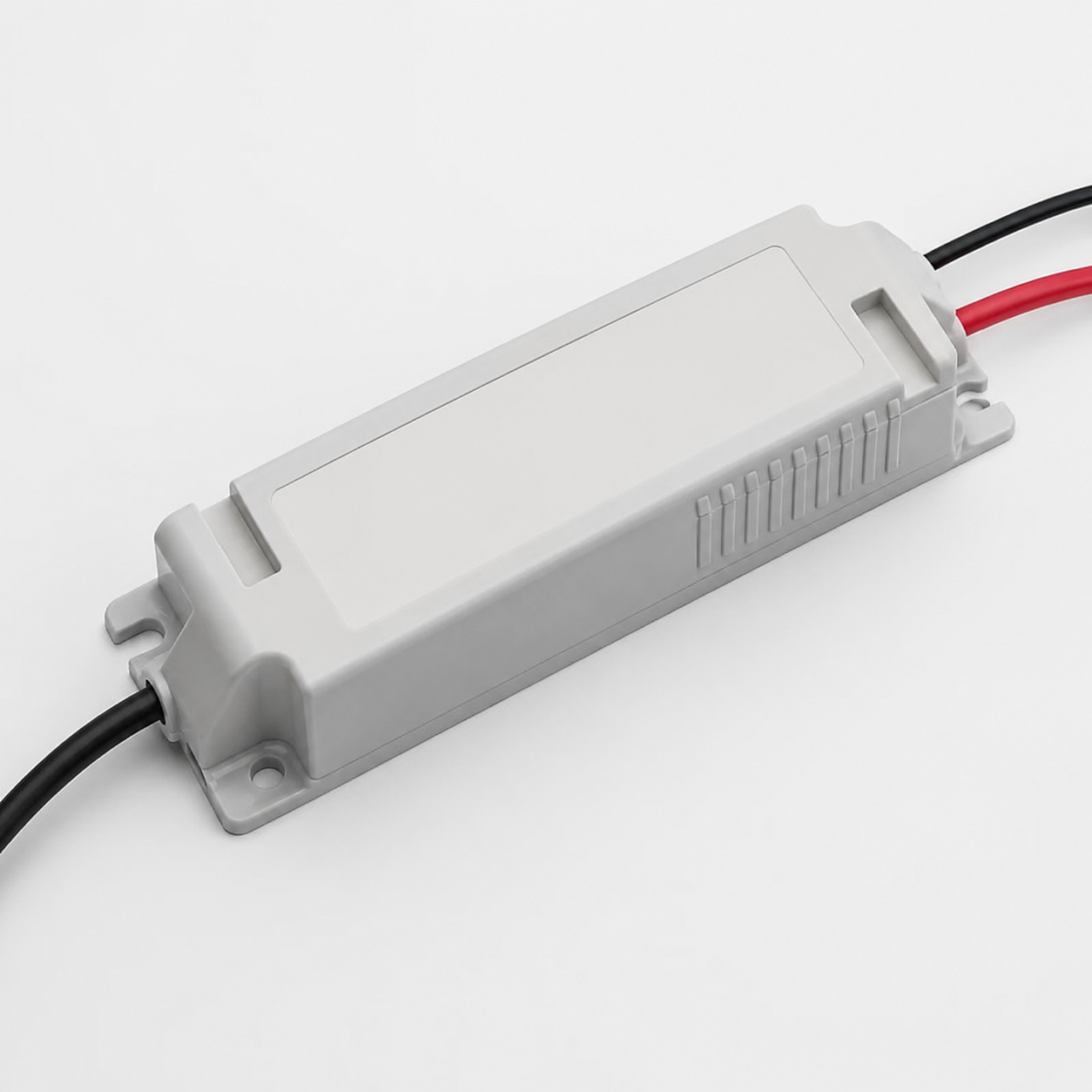
Understanding the Role of a Constant Current LED Driver
A Constant Current LED Driver is an important part of an LED lighting system because LEDs require controlled electrical current to operate within their recommended specifications. Unlike a basic power supply, a constant-current driver regulates the current delivered to the LED load and adjusts its output voltage according to the connected LED circuit. This helps maintain consistent illumination while reducing the risk of excessive current, unstable operation, overheating, and premature LED degradation.
The driver should not be treated as an independent component when designing or sourcing an LED lighting system. Its output current, voltage range, wattage, efficiency, protection features, operating environment, and compatibility with the LED load all influence the overall performance of the fixture. For commercial, industrial, architectural, and high-power lighting applications, selecting the appropriate driver is therefore an important part of achieving dependable long-term operation.
Why Controlled Current Matters in LED Lighting
LEDs are current-sensitive semiconductor devices. When the supplied current is not properly regulated, the LED can experience electrical stress that may affect brightness, thermal performance, consistency, and operating life. A suitable constant-current driver maintains the required current within its specified operating range, helping the LED system deliver more stable performance during normal operation.
This becomes particularly relevant in installations where lighting operates for extended periods. Industrial facilities, commercial buildings, retail environments, warehouses, architectural installations, and other project-based applications may place continuous demands on the lighting system. In such situations, a Constant Current LED Driver should be selected according to the actual LED load, required current, operating conditions, and installation requirements rather than simply the fixture's physical size or nominal wattage.
How Constant Current LED Driver Regulate LED Performance
A constant-current driver monitors and regulates the current supplied to the connected LED circuit. As the electrical characteristics of the LED load change, the driver operates within its specified output voltage range to maintain the required current. This regulated approach allows LEDs to operate closer to their intended electrical conditions and supports consistent light output.
The relationship between current, voltage, power, and LED characteristics makes driver selection a technical exercise rather than a simple product-matching process. The required current should correspond with the LED specification, while the driver's voltage operating range must accommodate the forward-voltage requirements of the connected LED load. The driver's power capacity should also provide appropriate operating headroom without creating an unsuitable electrical configuration.
Key Specifications to Check Before Selecting a Driver
The first specifications to review are output current, output voltage range, and rated power. These parameters need to correspond with the electrical requirements of the LED module or fixture. Selecting a driver only by wattage can result in an unsuitable combination because two LED systems with similar power ratings may have different current and voltage requirements.
A Constant Current LED Driver should be evaluated for efficiency, particularly in commercial and industrial installations where lighting operates for extended periods. Protection features, thermal behaviour, input characteristics, operating temperature, enclosure requirements, and installation conditions should also be matched to the application. Where dimming or other control functions are required, compatibility with the intended control system should be verified before final selection.
Choosing the Right Constant Current LED Driver for Different Applications
The application environment has a direct influence on driver selection. Architectural lighting may have different size, dimming, and integration requirements compared with industrial high-bay lighting. Commercial installations can place greater emphasis on operating hours, thermal conditions, efficiency, and maintenance requirements, while OEM projects may require specific electrical characteristics to integrate the driver into a particular lighting product.
For project requirements, the selection process should consider the LED load, installation conditions, expected operating hours, required output characteristics, available input supply, environmental conditions, and quantity requirements. This application-based approach helps avoid selecting a driver simply because its basic voltage or wattage appears to match the fixture.
What to Consider When Sourcing an LED Driver for a Project
For commercial and industrial requirements, product selection is only one part of the sourcing process. Buyers may also need consistent specifications across multiple quantities, technical clarification, suitable product availability, project coordination, and clear documentation. These factors can become particularly important when drivers are being integrated into large lighting installations or OEM production.
A dependable supplier should understand the relationship between the LED load and Constant Current LED Driver specifications rather than treating every requirement as a standard off-the-shelf purchase. Technical communication before ordering can help identify the required current, voltage, power rating, operating conditions, quantity, and other application-specific requirements.
Saffron’s Technical Approach to Constant Current LED Driver Solutions
Saffron works with LED power requirements across commercial, industrial, architectural, OEM, and project-based applications. Its LED driver offering includes constant-current solutions and other power-related products intended for different lighting requirements. The company focuses on reviewing the application's electrical requirements before recommending a suitable solution.
For project requirements, Saffron's approach includes understanding the LED application, reviewing voltage, current, wattage, efficiency, and protection requirements, and then matching the product with the intended lighting system. This process is useful for contractors, lighting professionals, electrical consultants, OEMs, and project buyers who need driver specifications aligned with a particular installation rather than a generic power solution.
Making Constant Current LED Driver Selection More Reliable
A well-selected Constant Current LED Driver can support stable current regulation, consistent light output, appropriate electrical operation, and dependable performance of the overall lighting system. Selection should begin with the LED manufacturer's electrical requirements and then consider the installation environment, operating conditions, control requirements, and expected usage.
For businesses sourcing LED drivers in quantity, technical compatibility and supply consistency should be considered alongside price. A driver that appears economical but does not match the LED system can create additional costs through replacement, troubleshooting, downtime, or reduced component life. A specification-led approach provides a more practical basis for evaluating LED driver requirements.