
Understanding Surface Ring Drum Light for Contemporary Spaces
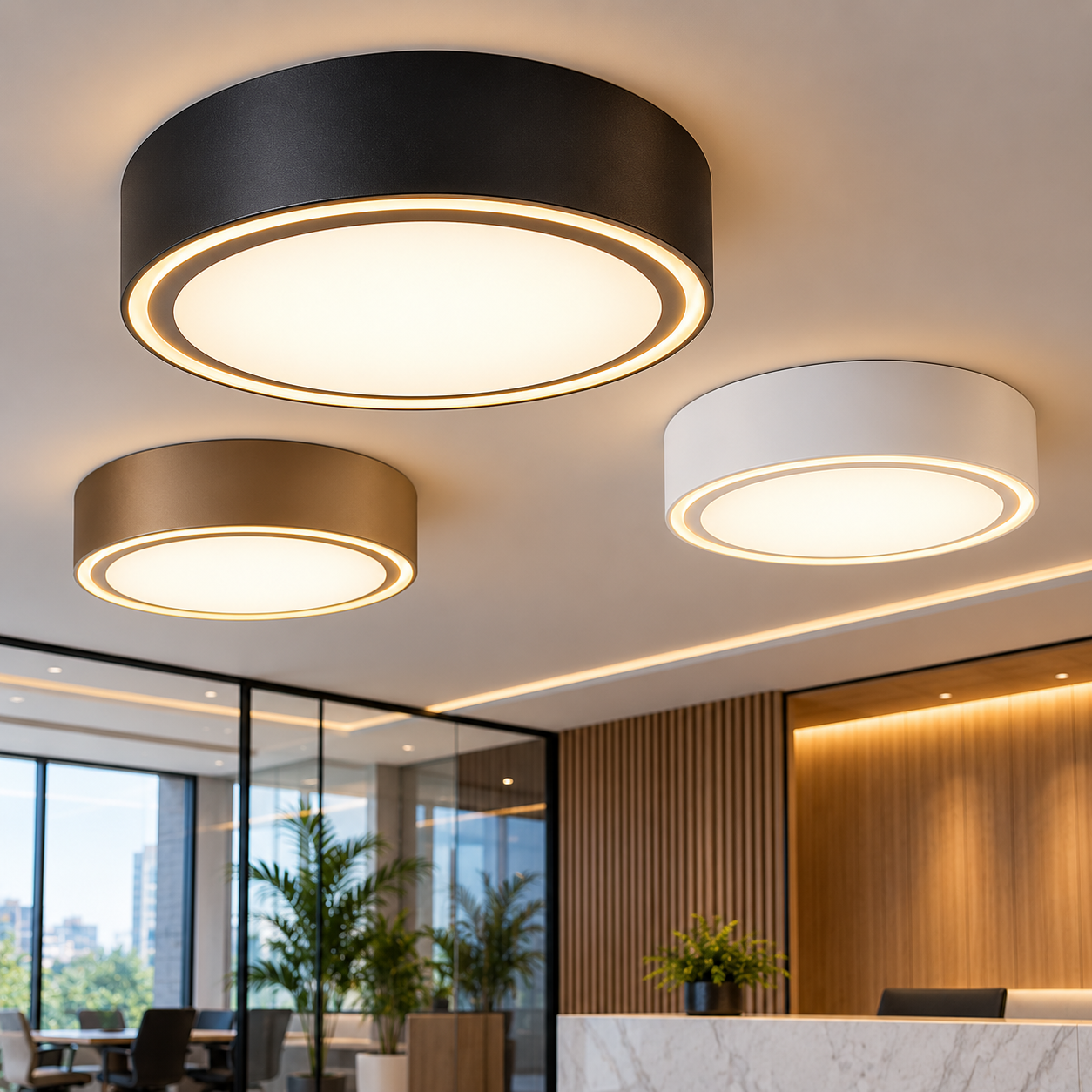
A Surface Ring Drum Light is a ceiling-mounted LED luminaire designed with a circular or drum-shaped form and a surface installation method. Unlike recessed fixtures, it is fixed directly to the ceiling, making it suitable for applications where a defined circular lighting element is required without creating a large ceiling cut-out.
Its performance depends on the complete lighting construction, including the LED source, housing, diffuser, optical system, and driver. These components influence light distribution, thermal management, glare control, maintenance access, and overall operating reliability. Selection should therefore consider the room size, mounting conditions, required illumination, color characteristics, and intended application.
How Surface-Mounted LED Lighting Supports Modern Interiors
A Surface Ring Drum Light can be suitable for projects requiring a visible circular ceiling fixture without extensive recessed work. It can be considered where ceiling conditions limit large cut-outs or where the fixture's circular form supports the intended architectural appearance.
Selection should be based on ceiling structure, fixture dimensions, lumen output, beam distribution, color temperature, driver configuration, thermal conditions, and maintenance access. Matching these technical factors to the space helps support suitable illumination, practical installation, and dependable long-term performance.
How Surface Ring Drum Light Works and Distributes Illumination
The LED source is positioned within the circular housing and directs light through a diffuser or optical system. The diffuser helps spread illumination across the intended area while reducing direct visibility of individual LEDs, supporting more comfortable and visually consistent lighting.
The housing provides structural support and protection for the internal components. Aluminium construction can also assist with heat dissipation, while diffusers or microprismatic optical elements help control light distribution, glare, and overall appearance. Proper selection of the LED, housing, diffuser, and driver ensures suitable performance for the intended application.
Understanding the Benefits of Surface-Mounted Lighting
Surface mounting is useful when the ceiling structure does not support recessed installation or when a visible fixture is preferred as part of the interior design. A Surface Ring Drum Light can reduce the need for extensive ceiling modifications and make installation more practical.
This approach is suitable for concrete ceilings, commercial interiors, renovation projects, and spaces where cutting the ceiling is not preferred. Proper selection of mounting hardware, ceiling compatibility, fixture weight, and electrical connections helps ensure secure installation and reliable performance.
Key Advantages of Surface Ring Drum Light for Modern Interiors
Surface-mounted installation avoids the need for a large recessed cavity, making it practical for suitable concrete ceilings, renovation projects, and spaces with limited ceiling depth. The circular or drum-shaped design can also provide a clean architectural appearance for offices, hospitality areas, retail spaces, reception zones, and residential interiors.
Lighting performance depends on the fixture’s diffuser, optical system, LED output, and mounting position. Some models can also integrate with dimming, occupancy sensing, or daylight controls when electrical compatibility is confirmed. Selecting suitable mounting hardware, fixture weight capacity, ceiling type, and control components helps support secure installation and reliable performance.
Step-by-Step Guide to Selecting the Right Ceiling Light
Step 1 Identify the Lighting RequirementDefine whether the fixture is intended for general, task-supporting, decorative, or combined illumination. This helps establish the required lumen output and light distribution.
Step 2 Assess the Ceiling ConditionCheck the ceiling material, mounting points, electrical access, structural strength, and available installation clearance before selecting the fixture.
Step 3 Determine the Required DiameterConsider room size, ceiling height, furniture layout, and visual scale. For a Surface Ring Drum Light, the diameter should be proportionate to the space and overall lighting layout.
Step 4 Select the Light OutputDetermine the required lumen output based on room function and fixture spacing. Multiple fixtures should be evaluated as part of the complete lighting plan.
Step 5 Select Color and CRIChoose color temperature and CRI according to the application, considering the different visual requirements of residential, commercial, retail, hospitality, and work areas.
Step 6 Evaluate the Optical SystemReview the diffuser, lens, beam distribution, glare control, and available photometric information to confirm suitable visual performance.
Step 7 Check Driver and Control CompatibilityVerify input voltage, driver type, dimming requirements, and compatibility with occupancy or daylight sensors where required.
Step 8 Verify Mounting RequirementsConfirm fixture weight, dimensions, ceiling type, and suitable mounting hardware. Secure installation should follow the manufacturer's specifications.
Step 9 Test Before Final InstallationFor larger projects, test a representative fixture to assess brightness, color, glare, alignment, appearance, and interaction with surrounding surfaces before completing the installation.
Surface Ring Drum Light for Efficient and Comfortable Illumination
A Surface Ring Drum Light provides a practical ceiling lighting solution where direct surface installation, circular design, and controlled illumination are required. Its performance depends on factors such as LED output, diffuser design, color characteristics, optical distribution, driver quality, and suitable mounting conditions.
Choosing the right fixture should also consider ceiling structure, room dimensions, required light levels, mounting hardware, electrical compatibility, and control requirements. Proper specification and installation can support consistent illumination, visual comfort, secure mounting, and dependable long-term performance across residential, commercial, retail, and hospitality spaces.